








On the girls tennis team, one of the most meaningful traditions isn’t something you see during a match. It doesn’t involve a scoreboard, a trophy, or even a racket. Instead, it’s a single shoe passed down year after year, holding decades of memories, inside jokes, and the legacy of the team. Known simply as “the shoe,” the tradition has been part of the team for over 20 years. Each season, one player is selected to keep it, adding her own contribution before passing it on to the next generation. While it may sound simple, the meaning behind it runs much deeper.
“The shoe is a tradition where a team member has it all year long and at the end of season banquet they add an item that represents a favorite memory or inside joke,” senior Addison Ginther said. “Then they pass it along to an underclassman and it continues on and on.”
What makes the tradition even more special is that it’s kept a surprise. New players don’t learn about the shoe right away. Instead, they first see it at the end-of-season banquet, when it’s passed down.
“Players do not normally find out about the tradition until they witness it at the banquet,” Ginther said. “So it is always funny to see their reaction.”
That moment of surprise quickly turns into curiosity, as players examine the shoe and all the items attached to it. Over the years, it has grown into a collection of memories, each one representing a different season and a different team dynamic. Senior Molly Slota, who once had the responsibility of keeping the shoe, remembers how meaningful those additions can be.
“Each girl who receives the shoe must add something that represents the team for that season,” Slota said. “I remember one season where we were all crazy about Little Bites for our match snacks, so a Little Bites bag was added. When I had the shoe, I added a toy hairbrush that represented all the time we spent getting ready together in the locker room.”
From snacks to small objects, each item tells a story. Together, they create a project of the team’s shared experiences both on and off the court.
The process of passing down the shoe is just as meaningful as the items themselves. According to Slota, the shoe is typically passed from a sophomore to a freshman, with the recipient chosen based on more than just their athletic ability.
“The freshman selected represents HSE tennis as a whole,” Slota said. “Showing outstanding qualities like team spirit, passion, support for teammates, and effort. It goes to someone who goes above and beyond and acts as a leader.”
For Slota, one of her favorite memories came when she got to pass the shoe down herself.
“My favorite memory was passing the shoe to my doubles partner, Lily Denton,” she said. “I might have been a little biased, but she truly had a great impact on the team, so I was honored to give it to her.”
At the same time, there’s also a sense of relief that comes with passing it on.
“The keeper of the shoe must keep it safe for a whole year,” Slota added. “So I was excited to get rid of it, too.”
Despite the responsibility, players take pride in protecting the shoe and contributing to its story. Over time, it has become larger, heavier, and impossible to ignore as it became covered in names, dates, and memories from players who came before.
“The shoe has lasted so long because it represents a little part of the team through each season,” Slota said. “Now it’s very heavy and decorated, so it’s hard to miss or lose.”
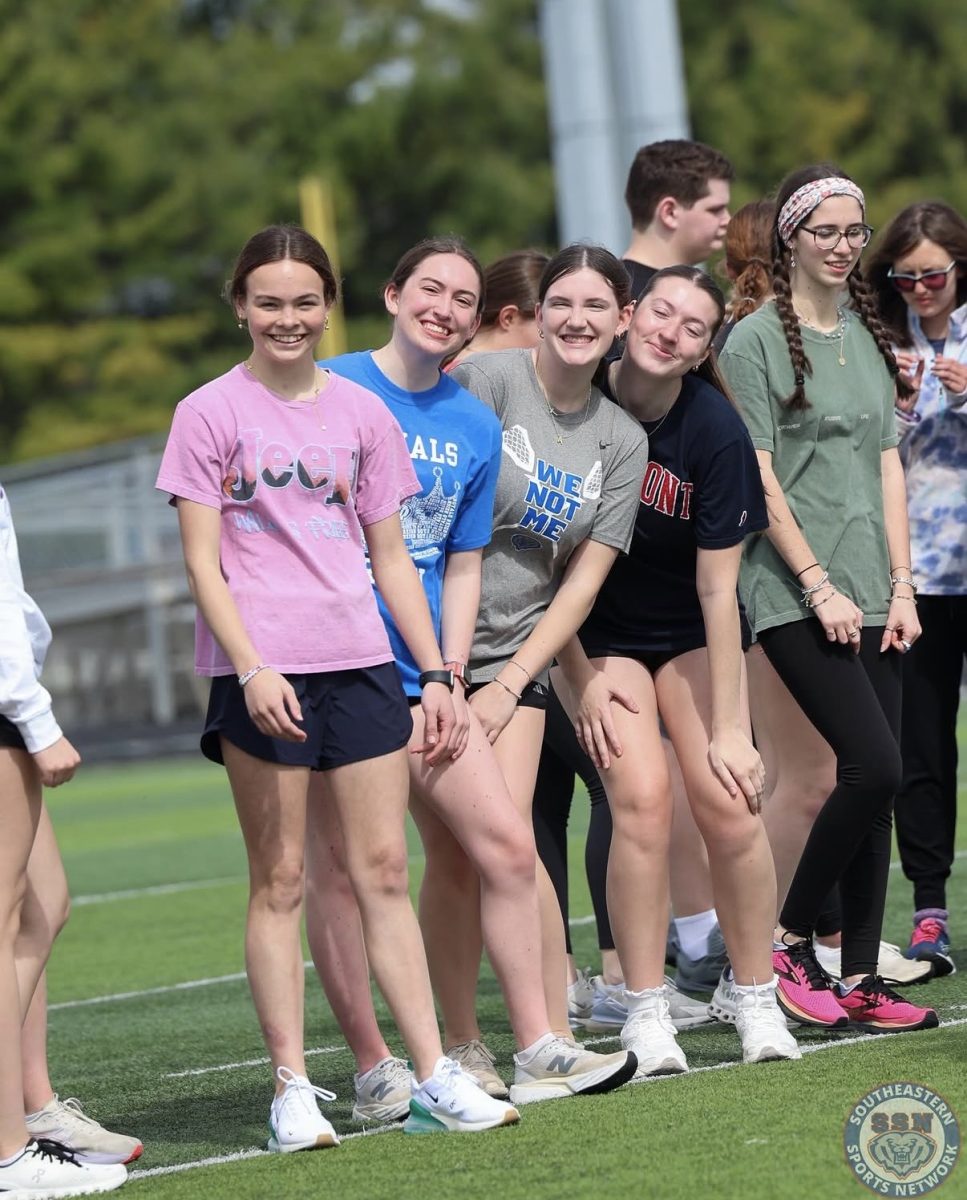
While the shoe is a meaningful tradition, both players emphasized that the team’s strong bond goes beyond any single object. The culture of HSE girls tennis is built on daily interactions, shared experiences, and constant support.
“Girls tennis is different from other sports because we are all part of one team,” Slota said. “Even if you lose your individual match, you can still win as a team. There’s always people cheering you on.”
Unlike many sports where JV and varsity operate separately, the tennis team practices and competes together, creating a more unified environment. Whether it’s cheering during matches, talking during practice, or spending time together off the court, those moments build lasting connections.
“This is the strongest team culture I’ve seen in my four years,” Slota said. “It starts with upperclassmen leading by example, but also the little things like getting food after matches or bus rides where we’re all blasting music.”
Ginther echoed the importance of reflection and connection when it comes to traditions like the shoe.
“Traditions like this are important because players get to reflect on their favorite moments of the season,” she said. “And see a glimpse of what previous years have looked like as well.”
In that way, the shoe serves as more than just a tradition and more of a bridge between past and present teams. It connects players who may have never met, but who share the same experience of being part of HSE tennis. And while the shoe may not be the main factor that brings the team together, it represents something that already exists: a strong, supportive, and connected group of athletes. For seniors like Slota, that connection is what they’ll miss most.
“Even if I’ve had a bad day, it feels so good to get on the court and just talk with my teammates,” she said. “These girls are like sisters to me.”
As each season comes to an end, the shoe is passed down once again but with new memories, new stories, and a legacy that continues to grow with every player who becomes part of it.