




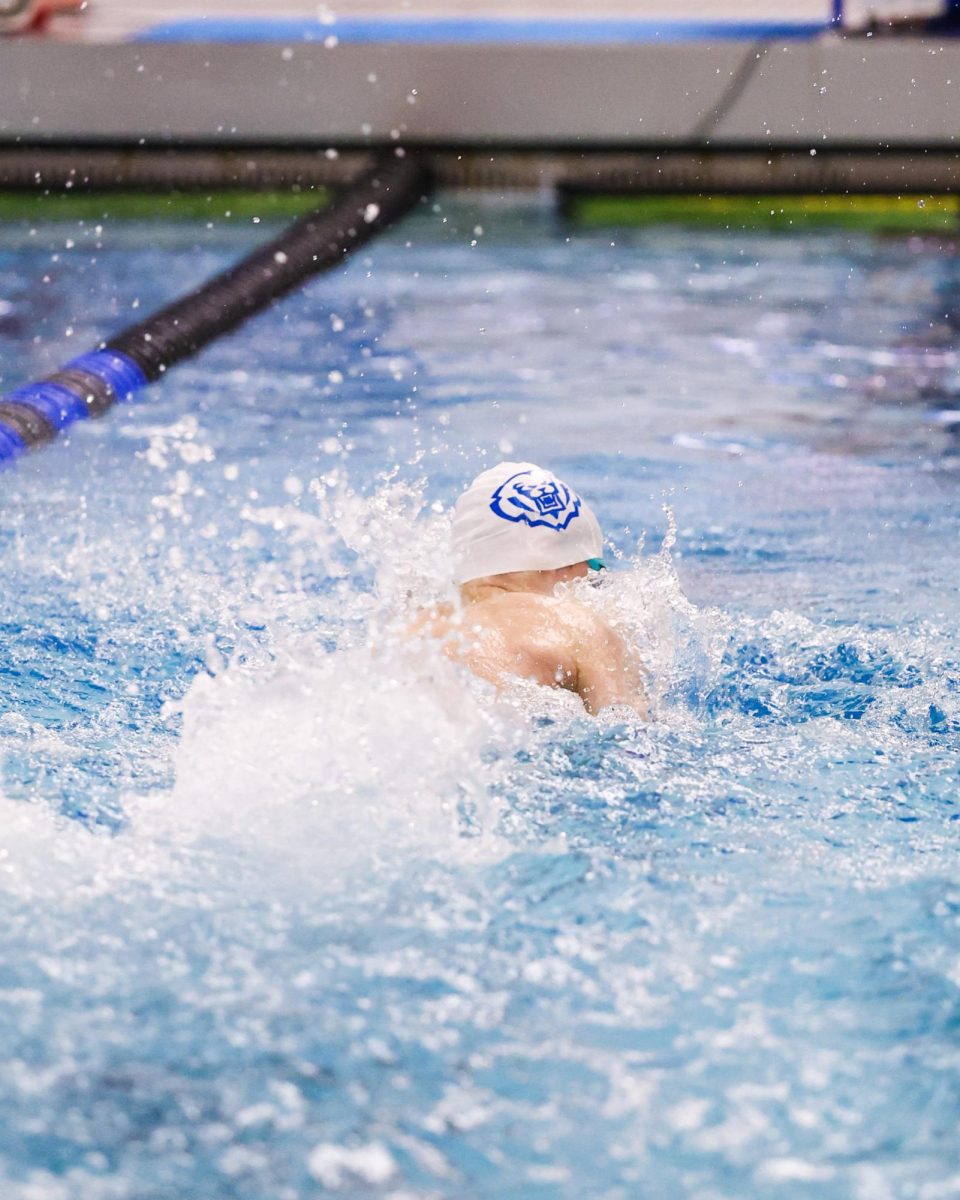
Before state championships, as the season intensifies, the boys’ swimming team joins a tradition separate from practice or race strategy. In the locker room, laughter shifts to focus as clippers buzz and swimmers shave their heads. This simple ritual marks a meaningful moment, signaling imminent change for the team.
For Xander Goss, the tradition means commitment and sacrifice—a symbolic act with competitive significance at the championship level.
“Physically speaking, we shave our heads and body hair to reduce as much drag as possible,” Goss said. “It can cut a few tenths of a second off our times and end up being the difference between first and second place in a race.”
Shaving their heads is important because it demonstrates that every swimmer is willing to make a sacrifice for the team. Personal appearance fades, giving way to a shared identity centered on performance and dedication. According to Goss, the tradition separates preparation from execution, highlighting those who are fully invested in the sport.
“This tradition is perfect because it shows the team who is truly committed,” he said. “Those who shave their heads choose the sport over their hair that will grow back in a few months.”
As the hair comes off, the team’s mindset begins to shift. The shave marks the transition from the regular season to championship mode. Goss explained that the moment serves as a mental checkpoint for the team.
“Shaving our heads kind of marks a turning point in the season,” he said. “All our dual meets are over, and it means it’s time to get serious. What we’ve been working toward all season is right in front of us.”
The experience brings out strong emotions among swimmers. Some feel nervous or excited, while others experience a sense of pride once it’s over. For Goss, the tradition carries emotional weight beyond competition.
“Shaving my head brings up all sorts of emotions, but mainly a sense of pride and some sadness,” he said. “It marks the end of yet another season and the imminent departure of the senior class.”
Beyond the moment itself, the tradition strengthens team unity. Freshmen, seniors, starters, and alternates all take part, putting everyone on equal ground. Goss believes this shared sacrifice is why the tradition continues to matter.
“This tradition will be one that hopefully never dies,” he said. “It’s a milestone in the season that marks the hard work we’ve put in so far and the pain still to come.”